
Speech
DPM Gan Kim Yong at the Launch of Go Green SG 2026
11 May 2026
People
DPM Gan Kim Yong
Topics
Environment
Speech by Deputy Prime Minister and Minister for Trade and Industry Gan Kim Yong at the launch of Go Green SG on 11 May 2026.
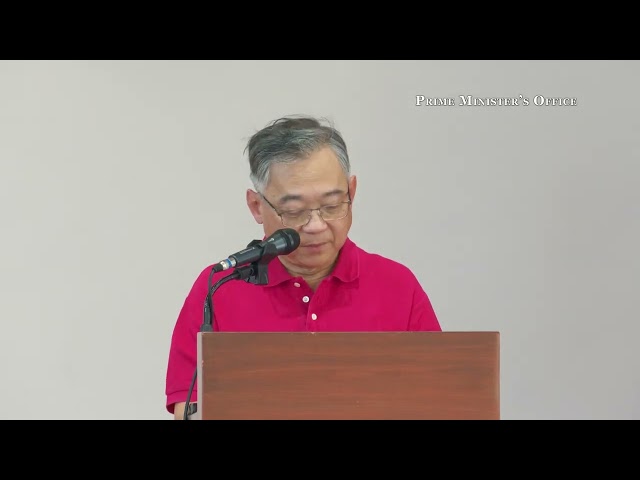
My Cabinet colleagues, Minister Grace Fu and Senior Parliamentary Secretary Goh Hanyan,
Naval Base Primary School Principal Richard Chia,
Staff and students of Naval Base Primary School,
Good morning to all of you!
Introduction
I am very delighted to join all of you for the launch of this year’s Go Green SG.
When we started Go Green SG in 2023, we recognised that climate change would be one of the defining challenges for Singapore.
As a small, low-lying island state, we are especially vulnerable to rising temperatures, heavier rainfall, dry spells and rising sea levels.
These will affect not just our environment, but also our daily lives and our economy.
We also knew that we could not afford to wait for the effects of climate change to get worse before acting.
Climate resilience takes time to implement, to build.
It requires long-term planning, sustained investment, and changes in habits across society.
That is why Go Green SG was started as a whole-of-government approach, whole-of-Singapore movement – involving individuals, families, schools, businesses, community groups, and the Government.
Since then, Go Green SG has grown steadily. This year, we are heartened that around 500 partners from across the People, Private, and Public sectors have come together to organise more than 1,000 activities, many of which are open to the public.
This strong support is encouraging. It shows that many Singaporeans understand that climate action is not an abstract idea; it is practical, urgent, and relevant to all of us.
Recent developments have reinforced the importance of building resilience early.
Disruptions in global oil and gas markets have shown how quickly external shocks can affect countries, businesses and households.
When energy flows are disrupted, the impact can be felt through higher electricity and transport costs, higher operating costs for businesses, and higher prices for everyday essentials.
Countries that have planned ahead – by diversifying their sources of supply, strengthening their systems, and organising themselves effectively – are better placed to absorb such shocks.
Climate change continues unabated
Around the world, countries are already experiencing more extreme weather – heatwaves, floods, droughts, landslides, and disruptions to food and energy supplies.
In Singapore, we are experiencing hotter temperatures and more frequent intense rainfall. These changes will become more significant over time.
Singapore’s Third National Climate Change Study projects that Singapore will become hotter, wetter and drier.
Daily maximum temperatures could reach almost 37 degrees Celsius by the end of the century. Without adequate adaptation measures, spending long periods outdoors could affect our health and well-being.
During wetter months, rainfall could be twice as heavy. This increases flood risk, and could disrupt transport, damage homes and infrastructure, and affect businesses and operations.
During drier months, we could receive only half the amount of rain. This will affect not just our water supply, but also our food supplies from our neighbours.
Sea levels will also continue to rise. During storms and high tides, sea levels could rise to 5 metres – how high is 5 metres? Higher than a double-decker bus. Without coastal protection, about 30% of Singapore could be at risk of flooding, including areas along our eastern shoreline.
These effects will also bring serious challenges for businesses.
Extreme weather overseas can disrupt supply chains, making it harder to import electricity, energy, raw materials and everyday essentials like food.
Closer to home, businesses may have to adjust how they operate – for example, by changing work-rest cycles because of rising heat, or protecting their premises against floods.
Climate risks could also affect insurance premiums, asset values and business opportunities and continuity too.
So even as climate action has wavered in some countries, the impact of climate change has not slowed. The physics of climate change does not pause just because global attention shifts elsewhere.
This is why we must stay the course.
Staying the course, together
For Singapore, climate resilience is not optional. It is part of how we safeguard our home, our economy and our future.
We have always planned long term.
We began investing in our water resilience before water scarcity became a crisis.
We strengthened our energy security before supply shocks became more severe.
We must take the same approach to climate adaptation.
This is why the Government is developing Singapore’s first National Adaptation Plan, in partnership with Singaporeans.
The National Adaptation Plan will be our long-term living roadmap to prepare for climate risks – from heat and floods, to water stress and sea-level rise.
We have designated 2026 as the Year of Climate Adaptation to deepen public understanding and co-create solutions with stakeholders to strengthen our collective resilience.
The National Adaptation Plan will help us think through how our homes, workplaces, schools, infrastructure and communities can be better prepared.
How we design buildings and public spaces; how we safeguard our essentials like food and water; how we keep vulnerable groups safe during extreme heat; and how we ensure that businesses and communities can recover quickly from disruptions – these are practical questions that need to be addressed.
But the Government cannot do this alone. Climate change, climate resilience must be a whole-of-Singapore effort.
Businesses have an important role to play.
They should use this opportunity to assess their climate risks, develop business continuity plans, and invest in appropriate adaptation strategies.
This is not only about managing risks. Companies that are more resilient, resource-efficient and climate-ready will be more competitive and better placed to operate in a more volatile world.
Communities are equally important in this effort.
Strong community support will help us respond better to heat, floods, haze, dengue and other climate-related risks.
Schools can play an important role too. They help our young understand climate change not as an abstract concept, but as something that affects their daily lives and shapes their future.
I look forward to joining the students of Naval Base Primary School later on to see your climate adaptation features, including your vertical greenery and solar-powered hydroponics garden.
Individuals can also make a difference through simple, practical solutions and actions.
We can conserve water and make every drop count.
We can choose local produce and be flexible in our food choices.
We can stay informed and help keep our loved ones safe. For example, we can use the myENV app for timely updates on floods or haze, check heat stress levels, and locate dengue hotspots.
We can also remind and help family members, neighbours and friends take precautions, especially the elderly and more vulnerable.
To stay cool, we can make use of tools such as Undercover, a prototype web-based map app by Open Government Products that helps users find cooler routes to their destinations.
Go Green SG as a national movement
This is where Go Green SG makes a difference.
It translates climate action and climate adaptation into practical, everyday experiences.
It brings together partners across society.
And it reminds us that everyone has a part to play.
I am pleased that many Go Green SG partners are rolling out activities to help Singaporeans better understand climate change and the need for adaptation.
For example, at the Green Futures Hub, an interactive space developed by Terra SG and Metropolitan YMCA, participants will learn about the climate risks facing Singapore and how to build a greener future.
Stridy, a non-profit organisation focused on community-driven cleanups, is partnering Just Keep Thinking, a nature edutainment platform, to teach participants about climate adaptation while litter-picking at East Coast Park.
These activities make climate action more tangible. They help Singaporeans see what adaptation means not just at the national level, but also in our neighbourhoods, our parks, our schools and our daily routines.
We will also be conducting a series of engagements with businesses and communities to shape our National Adaptation Plan together.
I encourage everyone to join the community, join our discussions in the coming months, and to visit our public exhibition on climate adaptation later this year.
Last but not least, if you have ideas for community-led climate adaptation solutions and projects, I encourage you to tap on the new $5 million Climate Adaptation Package under the SG Eco Fund.
Conclusion
When we launched Go Green SG in 2023, we knew that climate change would be a long-term challenge for Singapore. Three years on, that conviction has only deepened.
The world has become more uncertain. Energy disruptions, supply shocks and extreme weather have all reinforced the same lesson: resilience cannot be built overnight.
We must prepare early. We must stay the course. And we must act together – as individuals, businesses, schools, communities and Government.
The National Adaptation Plan will be an important step in this journey. Go Green SG will continue to be a platform to bring Singaporeans together. But ultimately, resilience will be built through the choices we make every day, in how we conserve resources, protect one another, and care for our shared home.
The climate challenges ahead are huge. But so is our capacity to respond. If we each do our part, we can build a Singapore that is greener and more liveable.
Go Green SG is not just a campaign, but a shared commitment. Let us reaffirm our commitment to protect our home, care for one another, and build a more resilient Singapore for generations to come.
Thank you.