
Speech
PM Lawrence Wong at GovTech's 10th Year Anniversary Dinner
5 November 2026
People
PM Lawrence Wong
Topics
Science and technology
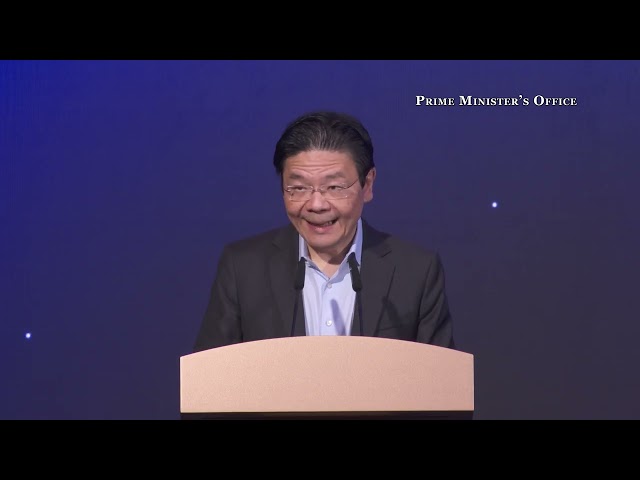
Speech by Prime Minister and Minister for Finance Lawrence Wong at GovTech's 10th Year Anniversary Dinner on 5 November 2026.
My Cabinet Colleagues
Chairman and Chief Executive of GovTech
Distinguished Guests
Ladies and Gentlemen
Good evening. I am delighted to join all of you for GovTech’s 10th anniversary.
Our Digital Journey
Singapore’s digital journey began more than 40 years ago, when we first started computerising the public service.
Over time, we realised that technology was not just a tool to improve efficiency. Technology had become mission-critical to government – shaping how we develop policies, deliver public services and respond to the needs of Singaporeans.
And so we needed to build stronger technological capabilities within the Government – to design our overall architecture, develop better solutions, and maintain control over critical systems. That was why we established GovTech in 2016.
And over the past decade, GovTech has made tremendous progress. We have built up deep expertise, and delivered many important products and services that Singaporeans rely on.
We saw the value of these capabilities during the Covid pandemic. It all sounds like a bad dream now, or even a nightmare, but many may still remember digital products like Trace Together, Safe Entry or the vaccination booking system. But what stayed with me most was the people behind them – the teams working under tremendous pressure, solving problems quickly and doing whatever was needed to support our national response. It showed what we can achieve when we combine technological expertise with a strong sense of mission and the determination to get things done.
And that same dedication is evident in your work every day. Some of it is visible in the products and services Singaporeans use. Much of it happens away from the public view – building and maintaining the systems, infrastructure and capabilities that Singapore and Singaporeans depend on.
So on this 10th anniversary, I want to thank all of you in the GovTech team – past and present – for your contributions and hard work. Thank you very much.
I also want to acknowledge our many industry partners – some of whom are here with us tonight. You work alongside us, you have contributed your expertise and you have helped us deliver better solutions. Thank you for your partnership too.
So we have indeed come a long way these past 10 years. But there is still much more to be done. Technology is advancing faster than ever, especially with artificial intelligence. And to harness these opportunities, we must be prepared to change – not just the technology we use, but also how we develop policies, organise our teams, and deliver public services.
This is the next phase of our digital transformation. And GovTech will play a critical role in leading this change. And let me share some of our thoughts with all of you tonight.
Integrating Technology and Policy
In Singapore, we have always emphasised that implementation is policy. Policymaking is not just coming up with good ideas on paper. Policies must work in practice and deliver results. And technology is central to making this happen – as I said just now, technology has become mission-critical.
For a long time, IT was treated as something downstream from policy. Policymakers decide what they need, and then the IT teams are asked to build the system to implement.
And many of you in GovTech know full well the limitations of this approach. By the time a project reaches you, many of the key decisions have already been made. Sometimes the policy has accumulated layers of rules, exceptions and special cases. And then you have the difficult job of translating all this into code – and maintaining the resulting complexity for years afterwards.
We know this current approach is not good enough. And we need policymakers and technologists to work together much earlier, and much more closely. And that requires changes – changes on both sides.
For policymakers, it means developing a better understanding of technology. Not so that everyone becomes a technology expert, but so that they understand what technology can and cannot do, and take these considerations into account when designing policies. And we are taking that seriously – that is why we are setting aside time for our Public Service Leaders to deepen their understanding of technology. We are doing it even at the political leadership level, including dedicated sessions for Cabinet Ministers. The aim is not to master all the technical details. It is to develop the instincts to ask the right questions, appreciate the possibilities and constraints, and understand how technology can help shape better policy choices.
For GovTech officers, it means going beyond implementing what policymakers ask for. We want you to be active partners in solving public policy problems. So you need to understand not just the instruction that you are given, but understand further the policy intent. Bring your expertise and judgement to the table early. Do not be afraid to challenge established assumptions, or to question requirements that create unnecessary complexity. Suggest different approaches, and better ways of achieving the same objective. Sometimes, the best solution is not more sophisticated technology, but a simpler policy.
And this is the mindset shift we need across Government. Instead of saying: “This is the policy – how do we get IT to implement it.” We should ask: “This is what we are trying to achieve; how can we design policy and technology together to deliver it in the best possible way?”
And we have seen what this can achieve. To cite a very small example, ACRA used to have 33 different combinations of penalties for late filings. Instead of building a system around all that complexity, the policy itself was simplified – from 33 combinations to four. And the result was a simpler policy, a simpler system, and better outcomes.
It is just one example, but again, if we apply this systematically across Government, the cumulative impact can be significant.
Changing established habits and ways of working will take time. But the direction is clear. Technology cannot be an afterthought in policymaking. It must be part of the process from the very beginning.
Change How We Build
Bringing policy and technology together is one part of the change. We also need to create the conditions for our technology teams to work differently.
Traditionally, many Government IT projects have followed a waterfall approach: you gather the requirements to seek approval, you procure a vendor, you build the system, you launch it, and then you maintain it.
This approach works well for infrastructure projects, where the requirements can be clearly specified upfront. But software is different. Technology evolves quickly. Users’ needs change. And often, we only discover what works and what does not when people actually start using the product.
And again, many of you in GovTech have been trailblazers for a different approach – to build iteratively, put products in the hands of users early, learn from their feedback, and then improve continuously.
We need to do more of such an approach, and we need to make it easier for teams across Government to work in this manner. It means changing not just our technology practices, but also the processes that govern how projects are delivered – how we scope projects, fund them, procure them, and hold teams accountable for outcomes.
And this iterative approach should not stop when a system is launched. A digital service is not something we build once, launch, and then consider completed. It is a product that must evolve with the needs of its users.
And that means we need teams that take continuing ownership of the products – improve them over time, keep them secure and reliable, and make sure they continue to deliver value.
We should also make greater use of common components and platforms, instead of having every agency build its own systems from scratch. And indeed, GovTech has already developed many of these building blocks, and these should increasingly become part of the common foundation for Government.
AI will give us an opportunity to take this transformation further – by empowering not just the technology teams in agencies, but officers across the Public Service to develop better solutions.
We are already harnessing AI tools across the Public Service, and we are encouraging officers to make use of them in their everyday work. But I believe for now, most officers are still using AI mainly as a chatbot, or to help perhaps translate or transcribe, or draft and edit documents. These are useful starting points, but we can certainly go much further.
We want to empower officers to use AI agents and tools to solve problems and improve the way work gets done. Because people who are closest to the work often know best where the frustrations and bottlenecks are, and where improvements can make the biggest difference. We are not there yet. To get there, we need to strengthen our data infrastructure, equip officers with the right skills and tools, and put in place the necessary safeguards.
But this is the direction we want to move towards. To bring technology, operations and policy even closer together – and enable officers across Government to take the initiative, develop solutions, and continuously improve the way we work and serve Singaporeans.
Modernising and Protecting our Systems
Even as we change how we build new systems, we must also modernise what we already have today. And that is yet another major challenge.
Because over the years, the Government has accumulated many systems. New functions and features have been added layer upon layer. And some systems now rely on programming languages that are no longer widely used.
As these systems grow older and more complex, they become harder to maintain and change. New features take longer to add. Vulnerabilities become harder to patch, and in fact, take time to patch, which is very worrying considering the threat from cybersecurity attacks. And policy changes that appear simple can take months to implement – a common frustration amongst policymakers.
CPF is a very good example. It started in 1955 - it was then a relatively simple retirement savings scheme. And over the decades, we have added many new schemes and features, while other agencies established links to CPF data and systems.
By 2020, CPF's systems contained some 34 million lines of code. The complexity of the system had become a serious constraint. Whenever we discuss CPF policy changes, we were often frustrated that even seemingly simple changes to CPF rules could take so long to implement. And meanwhile, the technology teams in CPF had to grapple with an increasingly complex and unwieldy system.
Modernising CPF’s systems has been a major undertaking, requiring several years of sustained efforts. This is just one system. There are many other critical systems like that in the Government.
And we are now systematically reviewing and modernising legacy systems across the rest of the public service.
It is painstaking work, and much of it will never be visible to the public. But it is essential – to prevent the legacy systems from holding us back, and to enable the Government to respond more quickly to changing needs.
At the same time, as we become more digitally connected and dependent on technology, we must also strengthen our cybersecurity.
Because the threats are becoming more sophisticated, and AI will raise the stakes further. A serious disruption to our digital systems can affect essential public services and undermine public confidence. So security and resilience cannot be afterthoughts. They must be designed into our systems from the outset, and continually strengthened as threats evolve.
Building Capabilities Across Government
All of these changes – bringing policy and technology together, changing how we build, modernising our systems and strengthening cybersecurity – ultimately depend on people.
We need people with deep expertise and a strong sense of public purpose. People who understand technology, but also understand policy and operations. And people who keep learning, because the technologies and skills we need will continue to change.
So GovTech must remain a place where such people can deepen their craft, take on difficult problems, and do work that matters.
And that means GovTech must continually renew its capabilities. GovTech has recently gone through a restructuring exercise. I know it has been a difficult period for some officers, and we will continue to support the affected officers as they acquire new skills and prepare for new opportunities, whether within GovTech or outside.
But renewing GovTech’s capabilities is only part of the task. We must also build stronger technological capabilities across the wider Public Service.
When we established GovTech, we deliberately concentrated the expertise in one organisation, so that we could quickly build up a critical mass of talent and capabilities. But the expertise cannot reside in GovTech alone. It really must be deeply embedded across the entire Public Service.
And that is also why, over the past year, GovTech has been bringing its product and engineering capabilities closer to frontline agencies. And we will be building on these efforts to extend GovTech’s expertise and capabilities across the whole of Government.
But as we progressively build up these capabilities elsewhere, GovTech itself must continue to be a centre of excellence – setting high standards, and tackling complex technological challenges that individual agencies cannot easily address on their own.
Ultimately, our goal is not simply to have a strong tech agency. It is to have a technologically strong Government. A Government where technology is integral to policymaking; where policymakers understand what technology can enable; where technologists understand the policy objectives and operational realities; and where both can work together to deliver better outcomes for Singaporeans.
Conclusion
So these are some of the key thrusts in our next phase of our digital journey. Clearly, there are challenges, but it is also going to be exciting work lying ahead of us.
Over the past decade, GovTech has helped transform the way government uses technology. In the coming decade, GovTech must help transform the way Government itself works.
So I look forward to working with all of you in the GovTech team to keep pushing boundaries, break new ground, and help us find better ways to serve Singaporeans together.
Thank you and happy 10th anniversary!