
Speech
PM Lawrence Wong at the Harmony Centre and An-Nahdhah Mosque 20th Anniversary Gala Dinner
14 October 2026
People
PM Lawrence Wong
Topics
Multi-racial and multi-religious society
Speech by Prime Minister and Minister for Finance Lawrence Wong at the Harmony Centre and An-Nahdhah Mosque 20th Anniversary Gala Dinner on 14 October 2026.
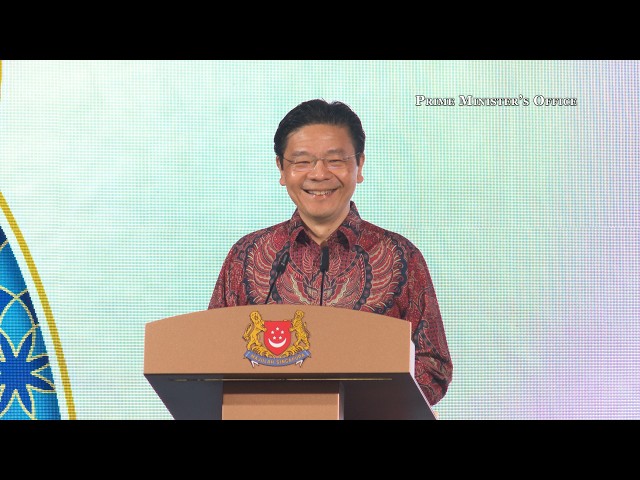
Acting Minister-in-charge of Muslim Affairs Mr Zaqy Mohamad
Mufti of Singapore
Faith Leaders and community leaders
Distinguished guests
Ladies and gentlemen
I am delighted to join all of you this evening for the 20th anniversary of the Harmony Centre and An-Nahdhah Mosque. In fact, I was at the opening of Harmony Centre 20 years ago in 2006. I am not sure how many of you were – I was not a politician then, but I was the Principal Private Secretary of then-Prime Minister Lee Hsien Loong, so I had been accompanying him there for the event. And I am happy to be back now, 20 years later.
We are not at the Harmony Centre but the gathering has certainly grown and it shows how many more partners and stakeholders we have as we continue to strengthen harmony in Singapore.
Let me start by saying a few words in Malay.
Selamat sejahtera dan Selamat petang.
Saya berbesar hati dapat bersama-sama anda semua untuk menyambut ulang tahun kedua puluh ini.
Pada bulan Ramadan lalu, saya berpeluang untuk berbuka puasa bersama para pemimpin,sukarelawan dan rakan-rakan masyarakat di Masjid An-Nahdhah dan Pusat Harmoni.
Saya dapat melihat sendiri usaha anda untuk berkhidmat kepada masyarakat dan mengeratkanhubungan antara rakyat Singapura daripada pelbagai agama.
Oleh itu, saya sangat gembira, dapat berjumpa lagi dengan anda pada malam ini. Saya inginmenyampaikan penghargaan atas pelbagai sumbangan anda dalam memperkukuh keharmonian antarakaum dan agama di Singapura.
Terima kasih, dan tahniah atas ulang tahun anda yang kedua puluh.
Izinkan saya meneruskan ucapan saya dalam bahasa Inggeris.
Twenty Years of Building Understanding
When we started the Harmony Centre in 2006, the world was still dealing with the aftermath of the September 11 attacks.
Many of you who were involved in the Centre from the beginning would remember that period well. Around the world, violent extremists were carrying out attacks in the name of Islam. Misconceptions about the religion were widespread, and mistrust between religious communities was growing.
Singapore had to respond, and we did so on two fronts.
First, we strengthened our security measures to protect Singapore against terrorism.
But we knew that security measures alone were not enough. So, secondly, we also took steps to counter prejudice and suspicion, and to strengthen trust and understanding between our communities.
The Harmony Centre was established then, and it was an important part of this effort. It was significant that the Centre was housed within a mosque, the An-Nahdhah Mosque – this was a deliberate and open invitation to Singaporeans of all faiths to learn more about Islam, and for Muslims to learn more about other faiths. And over the years, tens of thousands have walked through the doors of the Harmony Centre. Through conversations, learning journeys and interfaith programmes, the Centre has helped dispel misconceptions, build friendships and deepen trust.
So to everyone — past and present — who has helped build these bridges of trust, I would like to say a very big “Thank You” tonight! Thank you for all your efforts.
New Challenges
20 years on, the context has changed. The world has changed. But the Harmony Centre’s mission remains as important as ever.
The threat from Islamist terrorism has not disappeared. Groups like ISIS continue to recruit supporters, spread propaganda, and plot attacks around the world. Singapore continues to be viewed as an attractive target by these extremist elements.
The recent heightened tensions in the Middle East have added to the risks. Some extremist groups are seeking to externalise the conflict – to radicalise their supporters and incite attacks beyond the Middle East, including in this part of the world.
At the same time, the nature of the radicalisation threat has become more complex. We see more cases of self-radicalised individuals. Many involve young Singaporeans. And not all of them are motivated by Islamist extremism. We are also seeing cases of individuals influenced by far-right anti-Islam and neo-Nazi ideologies, as well as incel ideologies that promote hatred and violence against women. For example, one case involved a Protestant Christian youth who had planned to carry out attacks on mosques. There were also two young men who referred to themselves as “East Asian supremacists”, and one who identified even as a white supremacist – he is not white, he is Chinese. But he identifies as a white supremacist.
These cases show that extremist influences are becoming more diverse, and that anyone, regardless of age, race, or religion, can be susceptible. Across these different cases that we have identified, we see some common traits, especially amongst young people. They often are not adjusting well in school. They often have issues within their families. They do not get along with their peers. They may even be bullied by their friends or peers. They spend a lot of time online. And when they are online, they get influenced by some of these extreme ideologies and it gives them an excuse, or perhaps, a platform, to lash out and to have all their frustrations come out in the form of violence or at least in thoughts of violence that they hope to do to others.
And that is why we must continue to look out for one another, especially our young people in Singapore. We need to keep them connected to the real world, and ensure that they have strong anchors — family, friends, teachers, religious and community leaders – people they trust and can turn to for guidance.
More broadly, we must guard against people retreating into separate worlds — surrounded only by others who think like them and gradually losing their sense of connection with the wider community.
Developments overseas can also strain cohesion at home, especially when questions of religion and identity become intertwined with politics. We have seen this with the conflict in Gaza and the wider Israeli-Palestinian issue.
I recently met someone who shared this with me: He has Muslim, Christian and Jewish friends in Singapore. In the past, they could talk candidly about what is happening in the Middle East, even when they did not always agree. But now, they avoid the subject altogether, because the emotions run so high that they worry that there will be a disagreement affecting their friendship.
Now, it is good that Singaporeans care deeply about what is happening overseas. And it is natural for us to feel strongly, and to speak up for what we believe in. But if each time there is a difficult and sensitive issue, and we are not able to engage one another, and instead we retreat into our own communities, then we risk growing further apart. Importantly, whatever our views are about developments abroad, we must never allow them to divide us here at home, and we should not let conflicts elsewhere turn fellow Singaporeans against one another.
Above all, we must continue to guard against racial and religious intolerance in all its forms.
Prejudice is like a weed in a garden. If we become complacent, that weed can quickly take root and spread very quickly.
And we have seen in recent months how inflammatory comments can spread online, sometimes from people who believe that they can stay anonymous and so shield them from responsibility. One offensive remark can encourage another, and then gradually it will make that unacceptable behaviour seem normal. And that is why the Government will continue to take action against such behaviour. We will not tolerate racism or religious bigotry.
The Maintenance of Racial Harmony Act, which came into force last month, strengthens our legal framework for protecting racial harmony and provides safeguards against foreign influence.
But laws can only set the boundaries. They cannot, by themselves, create friendship and trust between people. That depends on all of us.
Harmony to Neighbourliness
And that is why tonight’s theme — From Harmony to Neighbourliness — is so important.
Harmony is about living peacefully alongside one another. Now that we mark this 20th anniversary, we want to go beyond that. And neighbourliness asks something more of us. It means getting to know the people around us, building friendships across our differences, and looking out for one another, especially when times are difficult.
In fact, this is what the Harmony Centre has been doing these past 20 years – bringing people together, not just to tolerate our differences, but to build mutual respect and genuine friendships.
And this evening, we are taking this work further with the JIRAN Interfaith Engagement Toolkit. JIRAN is an acronym that stands for Joining In, Respecting All Neighbours, J-I-R-A-N. But many of you would know jiran in Malay means “neighbour”. So I think this is a very appropriate name and acronym for this new effort.
And I am glad that our community leaders are showing the way. Tonight, Mufti and our faith leaders will affirm a shared Neighbourliness Charter, drawing on the wisdom of our different religious traditions. Thank you, all of you for showing the way.
These are all practical steps we can take to take interfaith engagement beyond just formal dialogues and organised events, and into our everyday lives and communities. Because ultimately, harmony is strongest when it is lived — in the way we speak to one another, the way we respond when prejudice or intolerance arises, and the way we look out for those around us.
Conclusion
20 years ago, the Harmony Centre was established at a time of heightened mistrust and uncertainty, to promote understanding of Islam and to strengthen relations across faiths.
20 years on, the challenges have evolved. But the fundamental task remains the same: to keep building trust, person by person and relationship by relationship.
And this is the spirit we must continue to nurture in Singapore — where each of us can hold firmly to our own faith and convictions, while respecting that of others; where our differences do not pull us apart, but enrich our shared life; and where we always look out for one another as neighbours and fellow Singaporeans.What we have here in Singapore is precious and we must always continue to cherish it and strengthen it.
So to everyone at the Harmony Centre and An-Nahdhah Mosque, and to all our partners, thank you for your contributions over the past 20 years. I hope we will all continue to work together to advance this important work – to bring Singaporeans closer together and to strengthen the bonds of friendship and trust between our communities. Long may that continue. Congratulations once again on your 20th anniversary!