
Speech
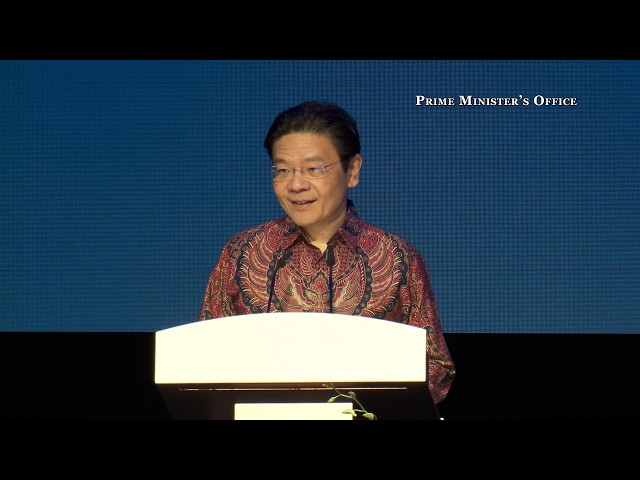
PM Lawrence Wong at the Singapore Kadayanallur Muslim League's 85th Anniversary Dinner
12 September 2026
People
PM Lawrence Wong
Topics
Arts, culture and heritage
Multi-racial and multi-religious society
Speech by Prime Minister and Minister for Finance Lawrence Wong at the Singapore Kadayanallur Muslim League's 85th Anniversary Dinner on 12 September 2026.
President of SKML, Mr Raja Mohamad,
My Cabinet colleagues,
Excellencies, and distinguished guests.
Good evening and Malai Vanakkam.
I am very happy to join all of you this evening for SKML’s 85th anniversary.
SKML’s Contributions
SKML has been at the heart of the Indian Muslim community life in Singapore since its founding in 1941, as we saw from the video just now. But the community’s roots go back much further – to the late 19th century. Migrants from Kadayanallur town in Tamil Nadu began making their way to Singapore back then – in search of a better life. They arrived with very little. They had to find their feet in a new and unfamiliar environment. So they turned to the closest to them – their family, neighbours and others from the same town. They helped one another, and over time, the community grew and put down roots here.
So SKML grew out of this spirit of mutual support.
It began with a simple but powerful instinct – to come together, help one another, and make life better for the next generation.
There is a Tamil saying that “If the seed is good, the harvest will be rich”.
And so from the very beginning, SKML planted good seeds – especially in education, self-help, and service.
For example, in 1946, your pioneers established the Umar Pulavar Tamil School. That was Southeast Asia’s first Tamil-medium school. It reflected the community’s pride in its language and culture, and its determination to give the next generation a better life and a better future. And today, the school’s legacy lives on through the Umar Pulavar Trust Fund and in MOE’s Umar Pulavar Tamil Language Centre, which serves to develop the Tamil language in Singapore.
Two years later, in 1948, the community established the SKM Cooperative, which continues its work today, providing savings schemes and community-based loans to help members meet practical needs.
And of course, in 1952, Kadayanallur Street was named as a lasting reminder of the community’s place in Singapore’s history.
From Community to Country
In many ways, SKML’s journey mirrors the larger Singapore Story.
In our early years, people naturally relied on those closest to them. They organised around hometown, kinship, language, race, or religion. And those ties gave people support and security in uncertain times in a new environment.
But subsequently, as generations put down roots, the circle started to widen. People whose forefathers came from different places became neighbours, schoolmates, colleagues, and friends. We learnt to live alongside one another, work together, and build a shared future together. And gradually, we developed a larger sense of belonging and identity – not only to our individual communities, but to Singapore and to one another as fellow Singaporeans.
This journey of nation building in Singapore may seem like something very normal to us, but what we have achieved is truly exceptional and unique. In many other places around the world, differences of race and religion can become deep fault lines that divide people.
But here in Singapore, we have chosen a different path. We have worked deliberately to build a multiracial and multireligious society. We made sure that every community has its place, and can practise its faith, speak its language and celebrate its culture and traditions. At the same time, we have common spaces and shared experiences – in our schools, our neighbourhoods, our workplaces, or National Service – where Singaporeans from different backgrounds can mix, socialise, make friends and grow up together.
Government policies have helped to create the conditions. But ultimately this sense of cohesion, of coming together, is built through people. It depends on all our communities being confident in their identities, and at the same time being willing to reach out, build bridges and develop trust with one another.
And SKML has been an invaluable partner in this nation building journey. Thank you for your efforts. You have remained deeply rooted in the Indian Muslim community, at the same time steadily expanding your partnerships with organisations like MUIS, MENDAKI and SINDA. These partnerships address practical needs, like MENDAKI’s Community Leaders Forum on digital literacy and scam awareness. And you have also worked with stakeholders to develop people and leaders – for example through your involvement with the Indian Muslim Professionals Network. And you have worked to preserve and share the community’s history – through initiatives like the Singapore Indian Muslim microsite and the Encyclopaedia of Singapore Tamils.
As a trusted and long-standing organisation, SKML can play an important role in various efforts, including to strengthen connections across different Indian organisations which we are doing through a new initiative led by MOS Dinesh. You can play a role in our M3+ initiative, and you can importantly serve as a bridge between our Indian and Muslim communities in Singapore. So tonight, as we mark the 85th Anniversary of SKML, let me once again say to everyone in SKML – members and volunteers – thank you for your many contributions.
Never Taking Cohesion for Granted
Going forward, the work we do to keep Singapore cohesive, strong and united is going to become even more important.
Around the world, societies are becoming more fragmented, more divided and more polarised. Part of this is due to economic challenges. Not everyone achieves the same outcomes. Some segments of society do not do as well, and they become disappointed and frustrated. But beyond the economic issues, the challenge comes when these economic dislocations get fed into a sense of identity, belonging, and perceived unfairness. That is when divisions really start to become more entrenched, and people start to build walls between – us versus them.
And Singapore is not immune to these challenges, as all of us are aware. During COVID, for example, we saw racism rearing its ugly head in Singapore. More recently, when we talk about investments in India, that racism, racist comments have surfaced again online. And so, even in Singapore, while we generally have a harmonious and stable society, from time to time, you will see segments drawing lines between foreigners and Singaporeans. Even between Singaporeans, they will draw lines between local-born and naturalised. And between our society, they will draw lines between race and religion.
These challenges are real, so while we keep on improving policies to tackle concerns around cost pressures, jobs, and make sure that every Singaporean gets a share in the nation’s progress, we must at the same time keep working at our relationships and strengthen the bonds of trust that hold our society together.
Doing so requires leaders who can bring people together. Leaders like Mr Naseer Bin Ghani, who is here tonight. For more than four decades, he has served as an educator, community leader, and advocate for the Tamil language and heritage. He has contributed not only to SKML but across our wider society – through MUIS, MENDAKI, SINDA and the Tamil Language Council where he now serves as Chairman. His service reflects the kind of leadership Singapore needs – one that is deeply rooted in one’s own community, but always ready to reach beyond it and serve the wider good. And so I am very glad that SKML has decided to honour him tonight with the Lifetime Achievement Award. Congratulations, Mr Naseer!
Conclusion
To conclude, SKML began with a simple instinct: Come together and look after our own.
What is remarkable is the meaning of the phrase “our own” – who is our own? That sense of “our own” has widened over the years.
SKML has not forgotten its roots or its responsibility to the Indian Muslim community here in Singapore.
But it has also widened this sense of “our own” to reach beyond the community – building partnerships, strengthening our society, and contributing to Singapore and Singaporeans.
And in many ways, this is our Singapore story. We always look after our own. But we have also widened the circle of whom we regard as our own. “Our own” no longer means those from our same family, the same language, or the same faith. “Our own” means Singaporeans regardless of race, language or religion.
Because whatever our different roots and backgrounds, we are all Singaporeans, and Singapore is our country and our home.
The good seeds planted by earlier generations have yielded a rich harvest. It has yielded a rich harvest here in Singapore, which we now enjoy. So now it is our turn to plant the seeds for the future.
And so to everyone at SKML – I say keep on planting, keep reaching out, and keep building for the future.
And if we do this well, I am confident that future generations will inherit a stronger SKML, a stronger Indian Muslim community, and most of all a more cohesive and united Singapore.
Thank you and Nandri.